BRIGHTEN YOUR DAY.
With a glorious butternut hummus that is also very Christmas-adjacent.

My phone screen glows, and a radioactive shade of orange lights up the room. I have been checking out the menu of Zaytinya, one of around 40 restaurants in the United States founded by Spanish-American chef Jose Andres. The menu pulls from Greece, Turkey and Lebanon, which is never a bad idea, and one dish in particular - the butternut hummus - looks adorable.
I don’t usually follow the big celebrity chefs, but Andres is different; he’s a world-changer. In 2010, he founded World Central Kitchen, a non-profit organisation built to provide meals in the wake of natural disasters - it has since provided an extraordinary 500 million meals. He and his crew are often the first on the ground anywhere in the world after earthquakes, floods and war. (The story is well-told by director Ron Howard in a 2022 National Geographic documentary called ‘We Feed People’ on Disney+).
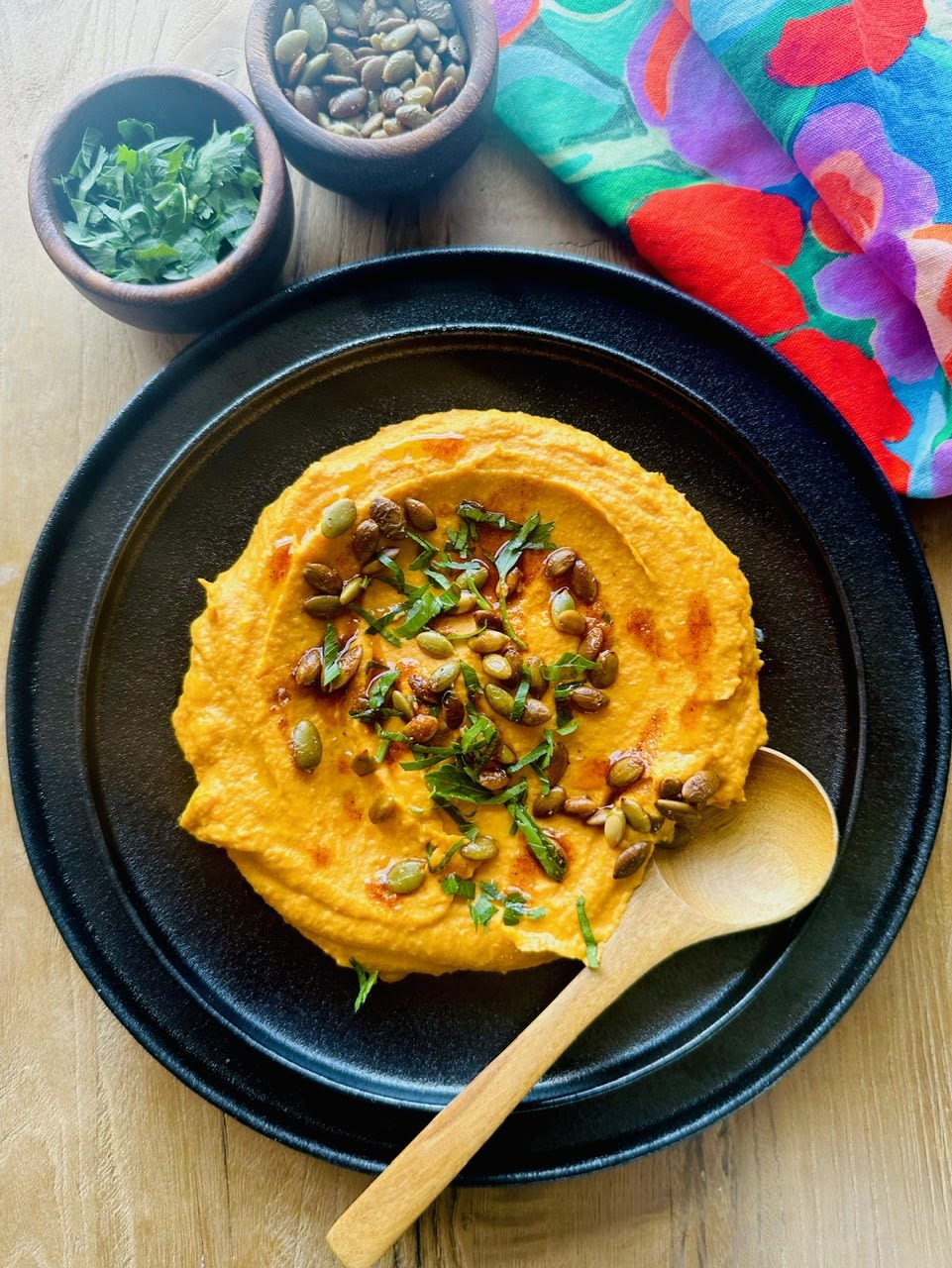
Back to the hummus. He bakes the butternut squash until the flesh is soft, then whizzes it with tahini (sesame seed paste) and olive oil, thinning it out with water and seasoning it with salt. It’s served, rather sweetly, with crisp-roasted pumpkin seeds, a dusting of za’atar, and a drizzle of pumpkin seed oil.
All good, I thought. Then - wait, where are the chickpeas in this hummus?
Like, I’m not saying I FIXED Jose Andres’ recipe, but I do think it should have had chickpeas.
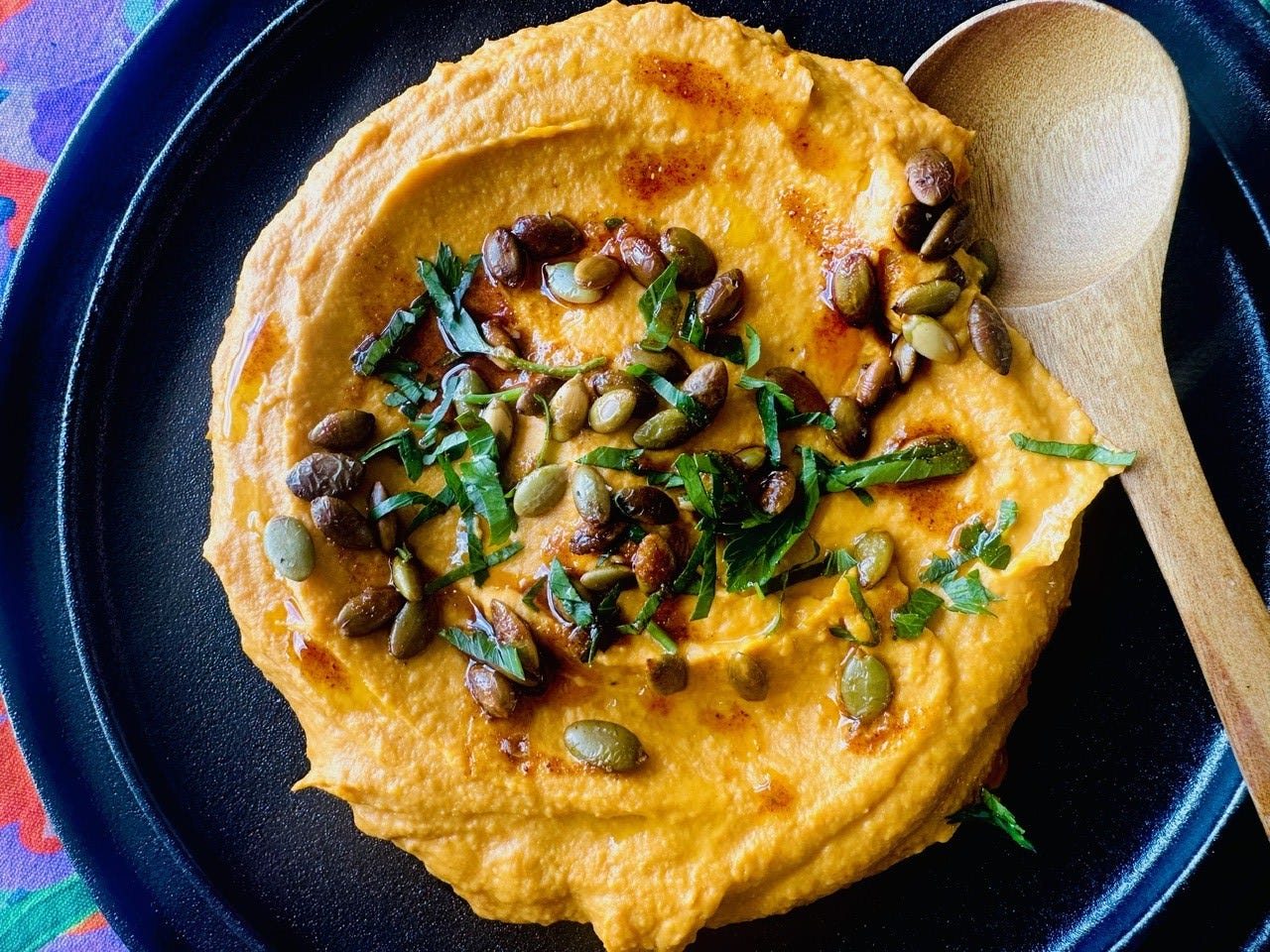
So now we roast the butternut squash until soft, scoop it out and puree it with tahini and CHICKPEAS, garlic, lemon, cumin and sea salt, and finish whizzing it with the liquid from the chickpea can, known as aquafaba, when it all becomes mesmerisingly soft and smooth and lightly fluffy.
Essentially, the butternut squash puree lightens the heavy richness of the tahini, and everything balances out very nicely.
I now propose this dish to be one of those life-savers that will get you through the next few weeks of cooking and entertaining.
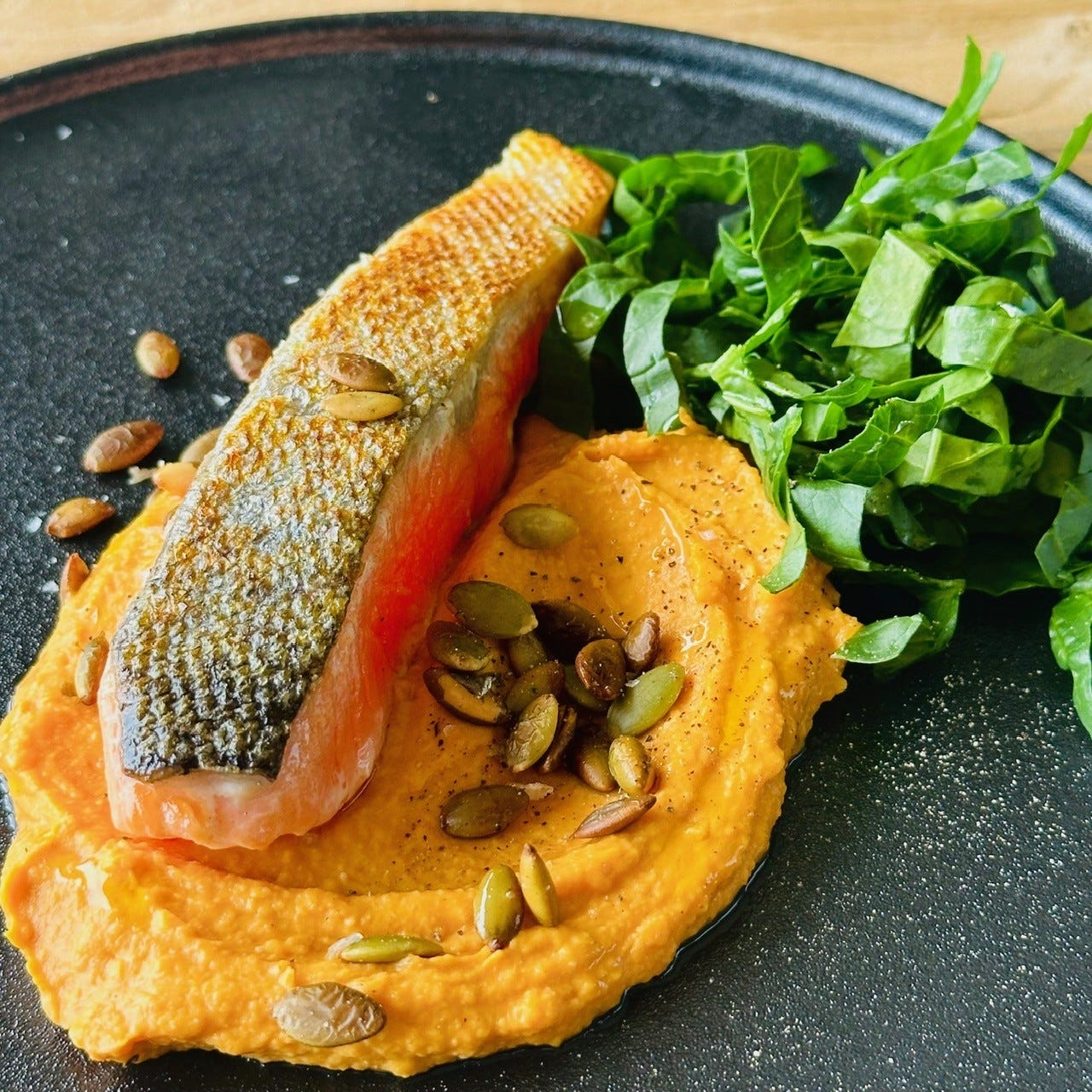
Make it for yourself first - it will go with anything from grilled sausages to pan-fried salmon (see last pic below).
If friends drop in for drinks, serve it as a dip, with grilled flatbread.
If you’re cooking for a non meat-eater, you’re in – maybe top it with some roasted carrots or grilled haloumi and a few extra toasty chickpeas.
If you’re doing a fancy dinner party, you can scoop out a perfect quenelle of it to place alongside coral trout or rib eye.
The science: Don’t be tempted to speed up the roasting of the pumpkin by steaming it instead or covering it with foil. It needs time to dry out and lose its natural moisture, because nobody wants watery hummus.
I push that idea by baking it in the half or quarter piece, which has the added advantage of not having to peel or chop or remove seeds. If you’re happy to peel and chop into smaller chunks, at least you’ll save on baking time – just toss them in a little olive oil and bake until tender, without allowing them to brown too much. We’re going for bright here, not brown.
The tahini: Love tahini (sesame seed paste), but don’t love the oil that sits on top? Pour the oil out of the jar and into a bowl, scoop out the tahini you need and place it straight into the food processor, then return the oil to the jar and seal.
The seeds: I’ve never been able to reconstitute the seeds of a pumpkin deliciously enough for my fussy-bitch requirements; but let us know in the comments below if you have, and how. Instead, I use packaged pumpkin seeds (pepitas), tossed with a teaspoonful of olive oil and sea-salt and either pan-fried or baked - but only for a few minutes, until they start to tan. They will crisp as they cool. Very moreish.
The paprika oil: Consider drizzling something smoky and spicy on top. I gently heated half a teaspoon of smoked paprika in 2 tbsp olive oil and a pinch of sea salt and loved it, but Someone Else thought it was gritty.
The butternut: Half a large butternut can weigh up to a kilogram, which will feed six or eight. If hordes are descending, do two halves.
Thanks Jose Andres, for the recipe, and for the World Central Kitchen.


BUTTERNUT HUMMUS
1 kg butternut squash, halved, quartered or chunked
Olive oil and sea salt for the butternut
200 g chickpeas, drained, reserving 150 ml liquid
3 tbsp tahini
1 garlic clove, finely grated
Half tsp smoked paprika or 1 tsp ground cumin or both
Sea salt and lemon juice to taste
2 tbsp pumpkin seeds, toasted
Any random herbs lying around, chopped
Heat oven to 200C.
Brush the cut surfaces of butternut with olive oil, scatter with salt, and bake on a tray lined with baking paper for 45 minutes to over an hour, until tender.
Allow to cool, then scoop and scrape out the tender flesh, discarding seeds and skin.
Whiz the butternut flesh in a blender or processor, then add the chickpeas, tahini, garlic, cumin or paprika and sea salt, and whiz until smooth, scraping down the sides if need be.
Add the chickpea liquid and lemon juice and whiz for 2 minutes until it feels light and fluffy.
Taste for lemon juice and sea salt and adjust.
To serve, pile the hummus onto a plate and use the back of a spoon to gently swirl it in a circular motion.
Scatter with chopped herbs, toasted pumpkin seeds and drizzle with a touch of olive oil (or keep in a covered container in the fridge for up to five days).
Tip: If it’s still too thick, add water a tablespoon at a time until you like the texture. Need chilli? This would eat up some dried red chili flakes.
Thanks for dropping by! And thanks for your comments and suggestions. The original recipe of Jose Andres and Michael Costa is in their book Zaytinya and shown here.
Special thanks to Terry for eating butternut hummus in three different ways on three consecutive nights. This makes a lot.
A note I should probably have put here years ago: oven temperatures are conventional. For fan-forced ovens, reduce the temperature by 20˚C. I’m in Australia, so teaspoons are 5 ml, tablespoons are 20ml, one cup is 250ml and kangaroos actually do hop down the main street.
I would like to acknowledge the traditional owners of the lands and waters upon which I work, live, cook and play; the Gadigal people of the Eora Nation. Thank you for sharing your culture, traditions, knowledge, spirit, art, music, humour and food traditions, allowing us all to experience a sense of belonging in this ancient land.
This looks delicious and definitely do-able for a 'not much of a cook'. Can I encourage you to not promote salmon in your recipes please? Most of the salmon sold in Australia is grown in dreadful conditions in cramped pens mostly around southern Tasmania, being fed food that fish should not eat. Their unhealthy growing conditions mean they get sick and are fed high doses of very strong antibiotics which has currently suspended the lobster/crayfish export industry and puts a 3 km exclusion zone for other fishing. There are better alternatives that are healthier for people and our ocean.
Stunning 🤩
Thank you once again Jill for making me believe
that I too can create in the kitchen 🥰