NASI BUT NICE.
A trip to Bali on a plate of fried rice and roast duck.

I had to have nasi goreng in Bali, because you’re not in Bali if you haven’t had nasi goreng. After asking everyone for the best place to go, I took the recommendation of a taxi driver: Warung Nia in the middle of the Flea Market in Seminyak.
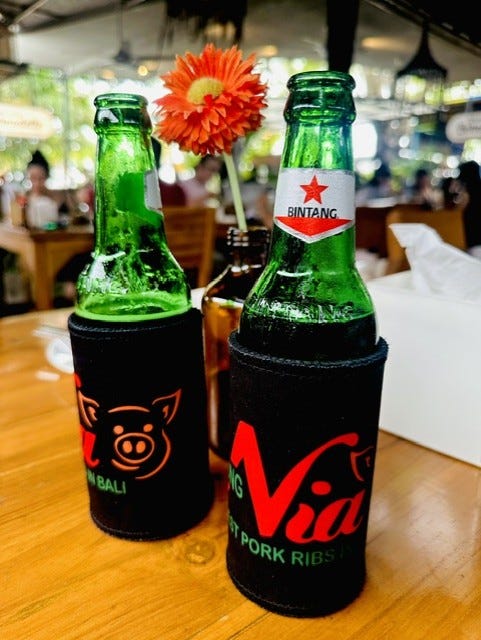
A warung – usually a small, family-run roadside stall or eatery - is exactly where you should eat nasi goreng, and this is a very good one. A big, casual open pavilion of tables, random fans to keep the air moving (it’s very hot) and a really good kitchen and great staff – bright and fast - and a brilliant picture menu. They specialise in pork ribs, which I totally ignore, but the mixed satay is great, because it comes sizzling on its own brazier, the only way one should ever eat satay. And Terry’s big bowl of steaming hot oxtail soup felt counter-intuitively right in the heat, as did a couple of Bintang beers in stubbie holders.


My nasi goreng with chicken came in the classic bowl-shape on the plate, which I quickly re-styled into something more casual. Over-analysing the rice on my plate, I could see strands of carrot, some wilted greens and maybe cabbage. On the side, pickled carrot, and the ubiquitous cucumber and tomato. A fried egg on top, of course.


Nasi means rice, and goreng means fried, but it’s so much more than fried rice, and I’m damned if I know how they get it so good and savoury and yet so light. The secret behind every nasi goreng is, of course, kecap manis, Indonesia’s caramelly sweet soy sauce. Potentially it is also the funk of shrimp paste (terasi, belacan, etc), and possibly Bali’s own fish sauce, and loads of shallots and garlic and galangal, and maybe turmeric.
I was in Bali as a guest of The Legian (old-school luxury at its best), on assignment for the Australia Financial Review, and not really there just to eat nasi goreng. After being a Bali nay-sayer for many years, I loved revisiting this beautiful island and meeting so many brilliant chefs, artisans, artists and creative people who are helping to formulate the future of Bali. (Thanks to The Legian’s own Budiman Tanto, for your great care in curating my itinerary - the story of that particular odyssey will appear in the AFR’s Friday section, Life & Leisure.)
Then of course I get home craving nasi goreng, because if you come home from Bali not craving nasi goreng than you haven’t been to Bali. So off I go, shopping for shrimp paste and krupuk prawn crackers; cooking up a pile of rice and having a ball.


I’ve teamed my nasi goreng with roast duck, in a token nod to one of Bali’s most famous dishes, bebek betutu, duck smothered in a spice paste and wrapped in leaves. But left-over roast chicken is also excellent, or pork, or prawns. And a jar of sambal oelek makes a most elegant sidekick.
First I did it with shredded duck through the rice, topped with a fried egg:
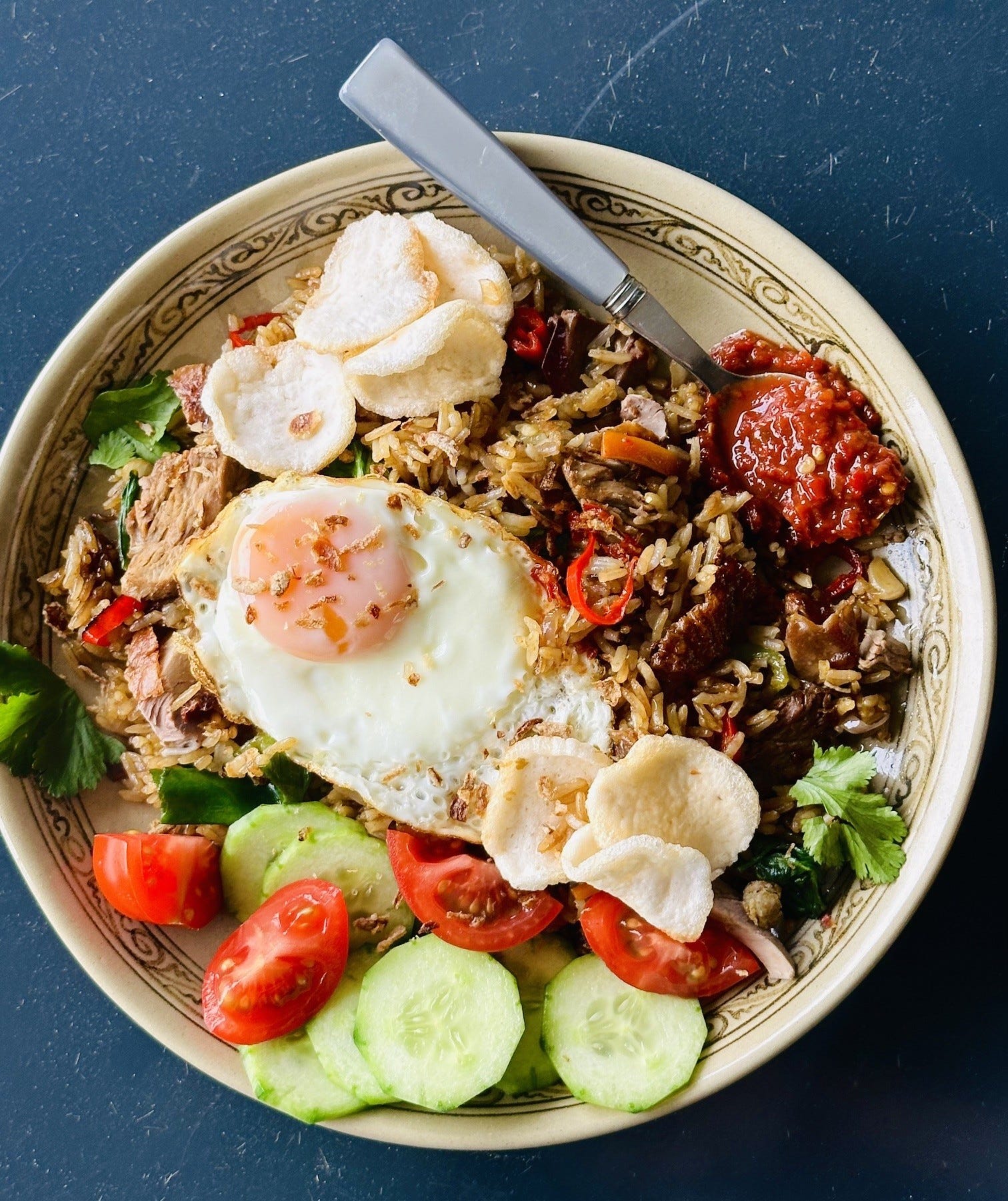
Then with the egg through the rice and the duck on top. Both versions are excellent.
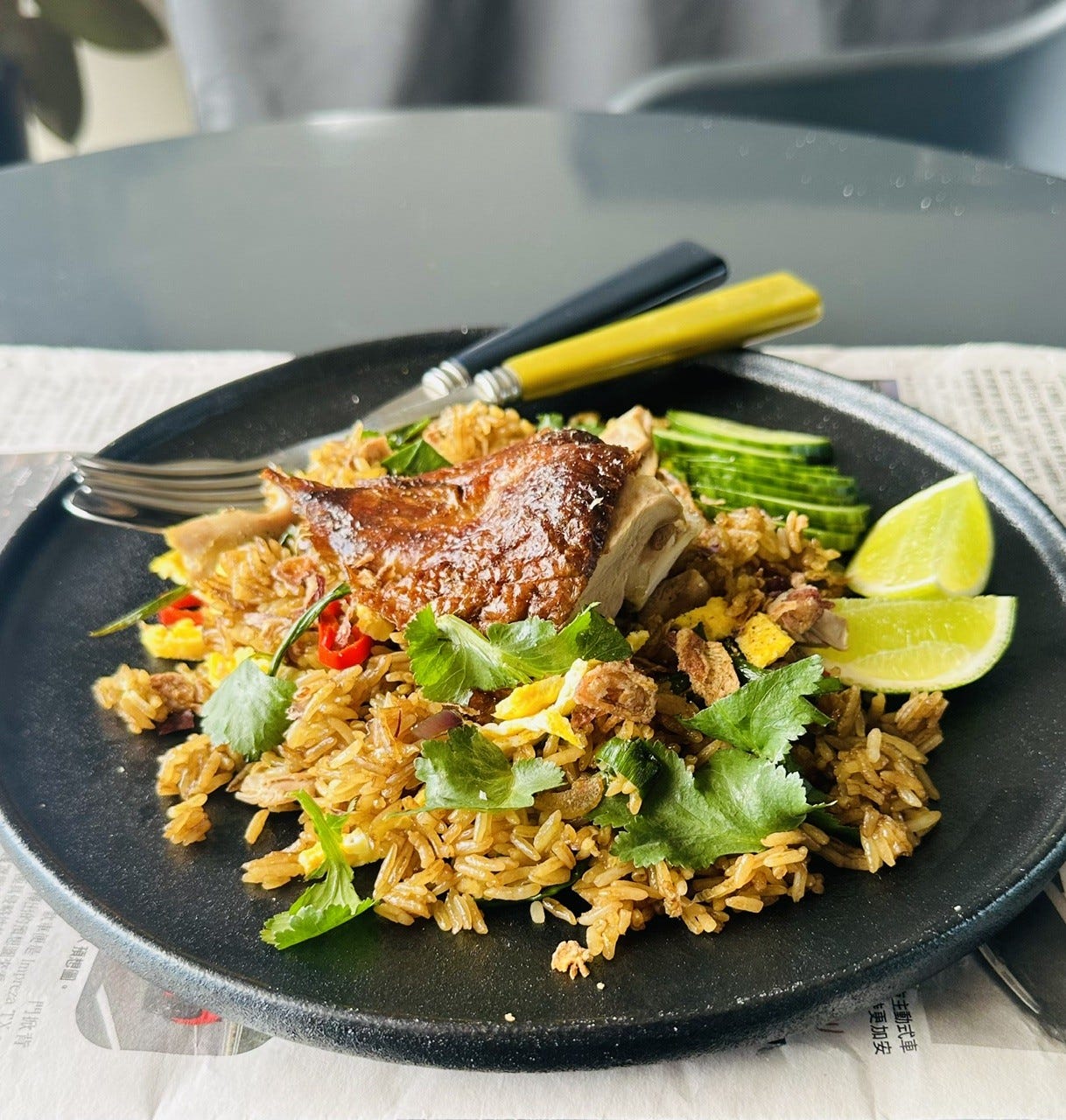
NASI GORENG WITH ROAST DUCK
Pick up half a roast duck from Chinatown and roughly shred the meat and skin to toss through the rice, or save some to serve on top. Serves 3-4.
3 cups cooked jasmine rice (from 1 cup of raw rice)
1 tbsp light soy sauce
2 tbsp kecap manis (sweet soy sauce)
1 tbsp fish sauce
2 tbsp neutral oil
3 to 4 red shallots, finely chopped
1 red chilli, finely sliced
3 to 4 garlic cloves, finely sliced
Thumb of fresh ginger, peeled and grated
1 tsp shrimp paste, if using
Half cup green veg, chopped eg cabbage, green beans, snow peas
Half Chinatown roast duck, meat shredded (or chicken, pork etc)
To serve:
Half Lebanese cucumber, finely sliced
2 or 3 cherry tomatoes, halved
1 to 2 tbsp deep-fried shallots
1 lime or lemon, cut into wedges
Mix the soy, sweet soy and fish sauce together and set aside.
Heat wok or fry pan until hot and add the oil.
Add the red shallots, chilli, garlic and ginger and fry for 1 minute then add the shrimp paste, if using, and fry for 2 or 3 minutes until fragrant.
Add any chopped green vegetables, and shredded duck, tossing well.
Increase the heat to high, and add the rice, breaking it up with your hands.
Pour the sauce mix over the rice and toss well over high heat.
Scatter with deep-fried shallots and serve with lime, tomato and cucumber.
TIPS:
Krupuk (kerapuk, kroepoek) prawn or fish or cassava crackers: Heat 2 cm of oil in a small pan, and when hot, add the crackers three at a time, whipping them out as soon as they fluff up, which is pretty much instantly. Drain on paper towel until needed.


Note: In this recipe, I’ve just fried the shallots, garlic, etc, but feel free to chuck them in a mortar or food processor and pulverise them first, and then fry, for a thicker base.
I LOVE this with shrimp paste (terasi in Bali, belacan in Malaysia, rich and funky-smelling anywhere). It’s best to buy it as a paste in a tiny container, and needs to be gently cooked first, not just added at the end as if a condiment. Don’t use too much. And keep the lid on unless you want the cat to go crazy wondering where the fermented shrimp are hiding.
Add some julienned carrot if you like, at the same time as the aromatics. Use any greens you want – I did bok choy stems and leaves, and a few snow peas. If you don’t have any, just add a big handful of spring onion green stems, they wilt beautifully.
Why the high heat? Because you want the kecap manis to caramelise to make the rice delicious. I often stop the tossing and just let it sit for 10 seconds on the heat once or twice, to help with the browning process.
If you don’t serve fresh cucumber and tomato on the side you will be questioned at Customs at Denpasar Airport as to why. (This is a joke, okay? You will not be questioned) Chilled shredded iceberg lettuce is also good.
Your choice: add a sunny fried egg on top of each serving, or do a quick omelette, cut into shreds and toss through at the end. Fried shallots are fabulous on top – use more than you think. Coriander, lime or lemon, why not.
THE WARUNG SHARED ITS RECIPE!
I had seen that Warung Nia was set up for cookery classes and approached Mufu the owner to see if I could get their recipe for nasi goreng. It was a yes! (Such nice people).
It’s worth going through their recipe before you do mine, in case you can sub in any of their tips and sort of smoosh the two together.
And do book into their cookery class if you are in Bali, I reckon it would be great fun, especially with partners and/or kids.
WARUNG NIA’S NASI GORENG AYAM
Kindly shared by owner Mufu of Warung Nia and Nia Cooking Class; thank you!
6 tbsp coconut oil
6 garlic cloves, finely chopped
6 shallots, finely chopped
2 large red chillies, finely sliced
100 g white cabbage, finely chopped
1 tbsp sambal tomat (spiced tomato sauce, see note below)
200 g fresh raw chicken, chopped
2 tbsp light soya sauce
2 tbsp sweet soya sauce (kecap manis)
2 eggs, beaten
600 g rice (cooked, day-old)
25g celery, finely sliced
50 g leek, finely sliced
50 g caisin (mustard greens, choy sum), chopped
Pinch of salt
2 tbsp fried shallots for serving
Heat the oil in a wok or heavy frying pan, and add shallots, garlic and chillies.
Fry for 1 minute or until shallots and garlic are golden brown.
Add cabbage, spiced tomato sauce and chicken, and fry for 1 minute, tossing.
Season with soy sauces and fry until it feels dry.
Add the beaten eggs and toss well to scramble, then add the rice, breaking it up with your hands.
Cook over medium heat, tossing well then add celery, leek and mustard greens, mixing well.
Season to taste with salt as necessary, scatter with fried shallots and serve.
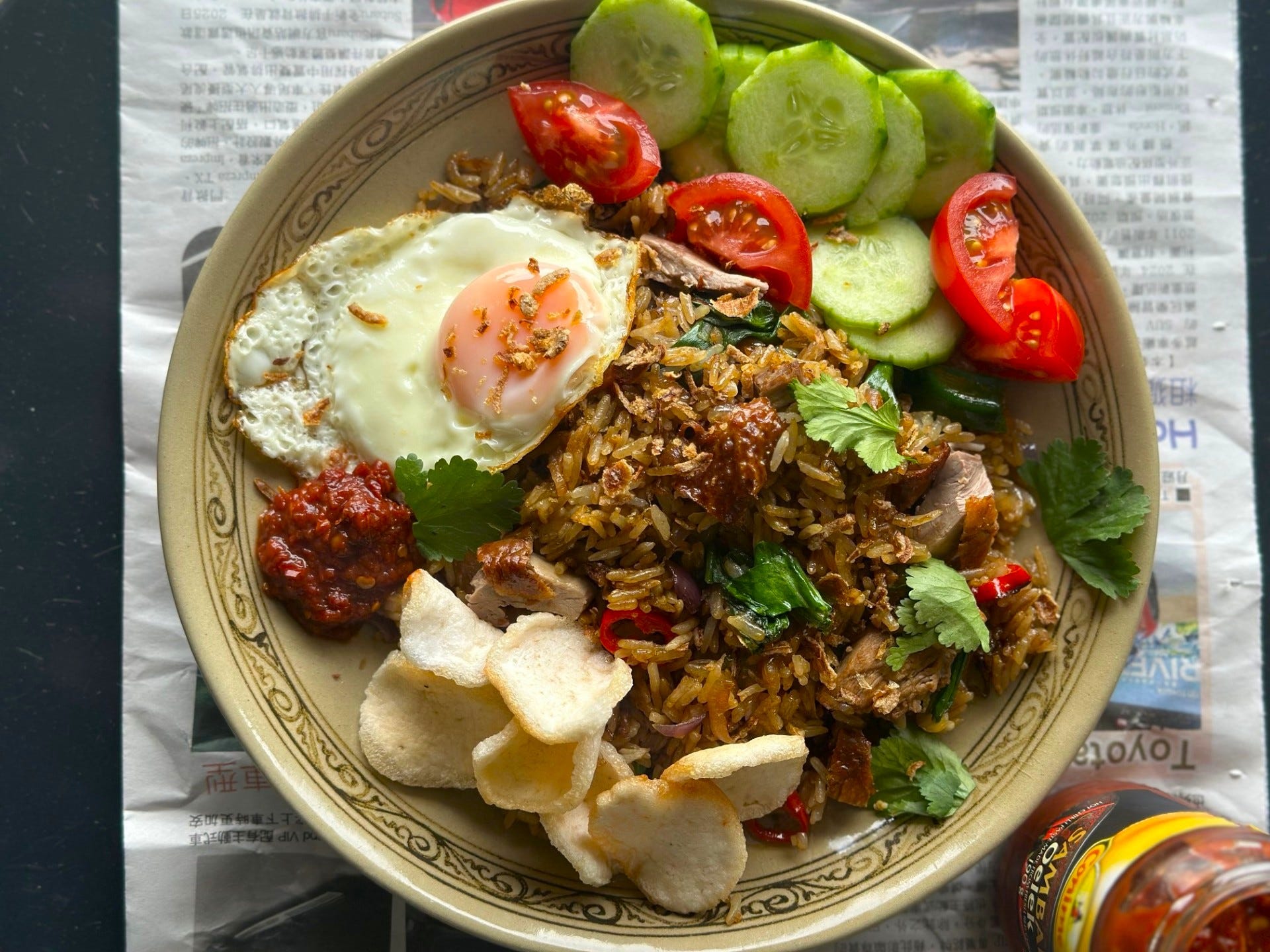
Note: Sambal tomat is one of the most popular and versatile sambals – just tomatoes, chillies, shallots and garlic, cooked down with shrimp paste, coarsely pureed, salted (and sometimes palm sugar as well) and finished with lime juice or tamarind. There’s a top recipe here from Janet De Neefe, Bali-based author, restaurateur, hotelier, and food and literary festival founder, and all-round amazing woman, reprinted with permission.
The tangy tomato flavour is reminiscent of ketchup mixed with chilli sauce so theoretically ... heretically ... if you were time poor, you could just add a good splash of tomato sauce mixed with your fave chilli sauce. (Did I say that? Did anyone see my mouth move?)


Snapped by paparazzi by the infinity pool at The Legian. Thanks for dropping by! And thanks for your comments and suggestions. Special thanks to Terry for the Bintang.
I would like to acknowledge the traditional owners of the lands and waters upon which I work, live, cook and play; the Gadigal people of the Eora Nation. Thank you for sharing your culture, traditions, knowledge, spirit, art, music, humour and food traditions, allowing us all to experience a sense of belonging in this ancient land.
I’ve loved nasi goreng since first eating it decades ago in Newtown, but I’ve never made it. Your evocative and helpful post is about to change that. I was recently diagnosed with wheat intolerance, which was quite a surprise. Adapting to cooking well without wheat, rye and barley has been frustrating and slow. I’ve made many disappointing dishes that erode the joys of cooking and eating. Nasi goreng is a good fit for the new regime and I’ll try it out.
We did the cooking class at Warung Nia and it was so fantastic! Our teacher mentioned it is quite traditional to add fresh chicken blood to Nasi Goreng before serving.